


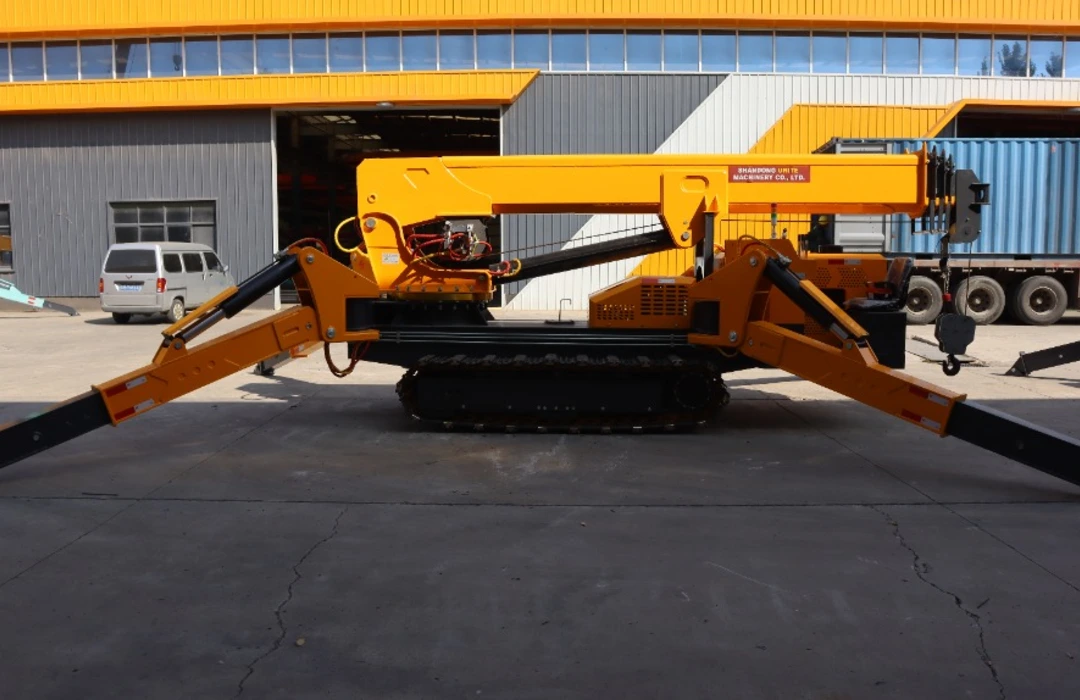
When working in tight or restricted environments, traditional lifting equipment often creates more problems than it solves. A spider lift crane is designed to overcome these limitations with its compact structure and powerful lifting capabilities. Whether for indoor construction, glass installation, or narrow job sites, this machine offers a highly efficient solution.
Why Traditional Cranes Struggle in Confined Spaces
Many contractors encounter serious challenges when using conventional cranes in limited-access areas. These machines typically require large working spaces, stable ground, and complex setup procedures.
Common issues include:
- Inability to access indoor or narrow environments
- High transportation and setup costs
- Longer project timelines
- Increased safety risks in restricted areas
These limitations directly impact project efficiency and profitability.
What Makes a Spider Lift Crane Unique
A spider lift crane is specifically engineered for flexibility and precision in tight spaces. Its compact size allows it to pass through standard doorways and operate in areas where traditional cranes cannot.
Key advantages include:
- Compact crawler design for easy movement
- Outriggers for stability on uneven surfaces
- Remote control operation for precision lifting
- Lightweight structure for indoor applications
These features make it an essential tool for modern construction and maintenance projects.
Main Applications of Spider Cranes
The versatility of spider cranes allows them to be used across various industries. Typical applications include:
- Glass curtain wall installation
- Steel structure lifting
- Indoor equipment positioning
- Factory and power plant maintenance
- Residential construction in confined spaces
A spider lift crane can significantly improve efficiency in all these scenarios.
Common Customer Pain Points and Solutions
When purchasing lifting equipment, buyers often face several concerns. Here’s how this type of crane addresses them:
Limited Working Space
Its compact footprint allows operation in narrow environments.
High Logistics Costs
Lightweight design reduces transportation expenses.
Difficult Operation
Remote control systems simplify handling and improve accuracy.
Safety Concerns
Advanced stabilization systems enhance operational safety.
How to Choose the Right Spider Crane
Choosing the correct equipment depends on your specific needs. Consider the following factors:
- Lifting capacity (1 ton, 3 ton, 5 ton, etc.)
- Maximum lifting height
- Indoor or outdoor usage
- Power type (electric or diesel)
- Transportation and access conditions
Selecting the right spider lift crane ensures better performance and cost efficiency.
Conclusion
A spider lift crane is more than just a piece of equipment—it is a solution to real-world lifting challenges. Its flexibility, safety, and efficiency make it the ideal choice for projects in confined spaces. Investing in the right machine can greatly enhance productivity and reduce operational costs.
Related Posts

 EN
EN  ES
ES  ID
ID  FR
FR
Post a Comment