


In modern construction and industrial maintenance projects, choosing the right engine crane lift solution can directly affect safety, efficiency, and labor costs. Many contractors struggle with lifting heavy materials in narrow indoor spaces, rooftops, factories, shopping malls, or urban construction sites where traditional cranes simply cannot operate. This is where spider cranes become an increasingly popular option.
A compact spider crane combines flexibility, strong lifting capacity, and easy transportation, making it ideal for glass installation, steel structure work, equipment maintenance, and indoor lifting projects. If you are searching for a practical lifting solution that reduces manpower while improving precision, this guide will help you understand how to select the right machine and avoid costly mistakes.
Why Traditional Cranes Often Fail in Small Job Sites
Many contractors initially consider truck cranes or large mobile cranes for lifting tasks. However, these machines often create several challenges:
- Limited access to narrow areas
- High transportation and setup costs
- Excessive ground pressure
- Difficult operation inside buildings
- Consommation de carburant plus élevée
- Expensive maintenance requirements
For projects inside factories, warehouses, hotels, airports, or rooftop installations, a large crane may not even fit through the entrance. This results in delays, extra labor, and lower profitability.
A spider crane solves these issues by offering compact dimensions and crawler mobility while still delivering impressive lifting performance.
What Is a Spider Crane?
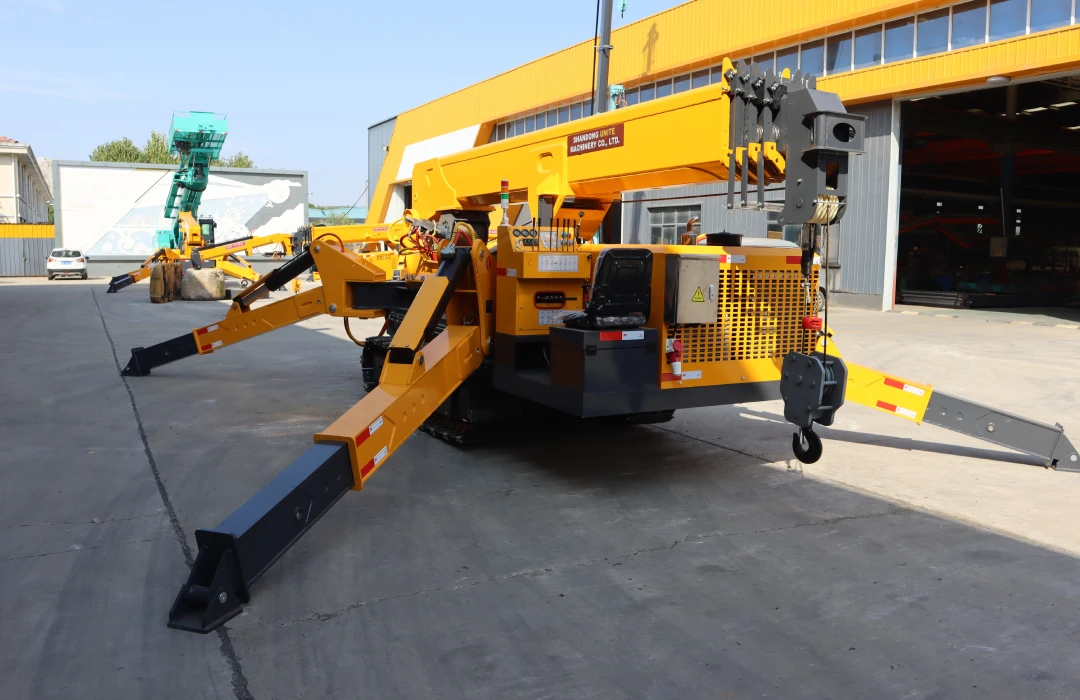
A spider crane is a compact mini crane equipped with outriggers that resemble spider legs. These cranes are designed for confined spaces where conventional lifting equipment cannot work efficiently.
Unlike a traditional engine crane lift, spider cranes can travel through narrow doors, elevators, and indoor passages while maintaining excellent stability during operation.
Common applications include:
- Glass curtain wall installation
- Indoor steel structure lifting
- Equipment installation
- Power station maintenance
- Railway construction
- Rooftop material lifting
- Industrial maintenance projects
- Residential construction
Key Advantages of Spider Cranes
Compact Size for Tight Spaces
One of the biggest advantages of a spider crane is its small footprint. Many models can pass through standard doorways or operate in restricted indoor environments.
This is especially useful for:
- Shopping malls
- Underground projects
- Factories
- High-rise buildings
- Indoor renovation projects
Strong Lifting Capacity
Despite their compact design, spider cranes provide powerful lifting performance. Depending on the model, lifting capacities typically range from 1 ton to over 10 tons.
For contractors needing a reliable engine crane lift alternative, spider cranes deliver both strength and flexibility.
Easy Transportation
Spider cranes are lightweight and easy to transport between job sites. This helps reduce logistics costs and improves project efficiency.
Remote Control Operation
Modern spider cranes often support wireless remote control systems, allowing operators to work from a safer distance with better visibility.
This improves:
- Sécurité
- Precision
- Operational efficiency
- Worker confidence
Low Ground Pressure
Crawler tracks distribute weight evenly, making spider cranes suitable for sensitive flooring and indoor surfaces.
Common Problems Buyers Face When Choosing a Spider Crane
Choosing the Wrong Lifting Capacity
Many buyers focus only on maximum lifting weight without considering:
- Working radius
- Boom length
- Site conditions
- Actual lifting height
A crane that lifts 5 tons at short distance may lift far less at extended reach.
Ignoring Site Access Conditions
Before purchasing a spider crane, always evaluate:
- Door width
- Floor load limits
- Ceiling height
- Terrain conditions
- Transportation requirements
A compact machine with folding outriggers may save significant setup time.
Overlooking Maintenance Support
Some buyers select low-cost equipment without considering spare parts availability or technical support. This often leads to downtime and expensive repairs.
Reliable manufacturers usually provide:
- Spare parts supply
- Technical training
- Online support
- Maintenance guidance
How to Select the Right Spider Crane
Define Your Main Application
Ask yourself:
- Will the crane mainly work indoors or outdoors?
- What materials will be lifted?
- What is the maximum lifting height?
- How narrow is the working area?
Different projects require different configurations.
Evaluate Boom Length and Working Radius
Longer boom length increases flexibility but may reduce lifting capacity at full extension.
Understanding load charts is essential before purchasing any engine crane lift equipment.
Check Power Options
Spider cranes are available in:
- Diesel versions
- Electric versions
- Hybrid systems
Electric spider cranes are especially popular for indoor projects due to:
- Faible bruit
- Zero emissions
- Better environmental compliance
Compare Safety Features
Modern spider cranes should include:
- Overload protection
- Emergency stop system
- Automatic safety alarms
- Anti-tip monitoring
- Remote control systems
Safety directly impacts project reliability and operator confidence.
Spider Crane vs Traditional Engine Hoist
Many buyers compare spider cranes with workshop engine hoists or standard lifting devices.
Here are the main differences:
| Fonctionnalité | Grue-araignée | Traditional Engine Hoist |
|---|---|---|
| Mobilité | Excellent | Limitée |
| Outdoor Use | Yes | Usually No |
| Indoor Access | Excellent | Modéré |
| Lifting Height | Haut | Faible |
| Remote Control | Available | Rare |
| Adaptabilité au terrain | Strong | Weak |
For construction and industrial projects, a spider crane often provides a more versatile engine crane lift solution.
Industries That Commonly Use Spider Cranes
Spider cranes are widely used in:
Construction Industry
Used for glass installation, steel structures, and material handling.
Manufacturing Plants
Ideal for machine installation and maintenance in tight workshops.
Power and Energy Projects
Used for transformer installation and equipment replacement.
Railway and Infrastructure
Perfect for narrow tunnel operations and bridge maintenance.
Commercial Buildings
Suitable for malls, airports, and office tower projects.
Maintenance Tips to Extend Crane Lifespan
Proper maintenance helps reduce downtime and operating costs.
Daily Inspection
Check:
- Hydraulic systems
- Wire ropes
- Hooks
- Safety systems
- Track condition
Lubrication
Regular lubrication reduces wear and improves machine reliability.
Operator Training
Well-trained operators improve:
- Sécurité
- Efficacité
- Equipment lifespan
Use Genuine Spare Parts
Cheap replacement parts may lead to system failures and higher repair costs.
Future Trends in Spider Crane Technology
The spider crane industry continues to evolve rapidly.
Key trends include:
- Electric-powered cranes
- Intelligent remote systems
- Lightweight materials
- Smart safety monitoring
- Energy-efficient hydraulic systems
As urban construction projects become more complex, demand for compact lifting equipment continues to grow.
Réflexions finales
Choosing the right spider crane is not simply about lifting capacity. Buyers must evaluate project requirements, working conditions, transportation, safety features, and long-term operating costs.
A high-quality spider crane can significantly improve efficiency while reducing labor expenses and operational risks. Whether you need indoor lifting, rooftop installation, or confined-space construction support, selecting the correct engine crane lift solution can give your business a major competitive advantage.
If you are planning to invest in compact lifting equipment, understanding your actual project needs before purchasing will help you avoid unnecessary costs and maximize long-term productivity.
Articles connexes

 FR
FR  EN
EN  ES
ES  ID
ID
Poster un commentaire