


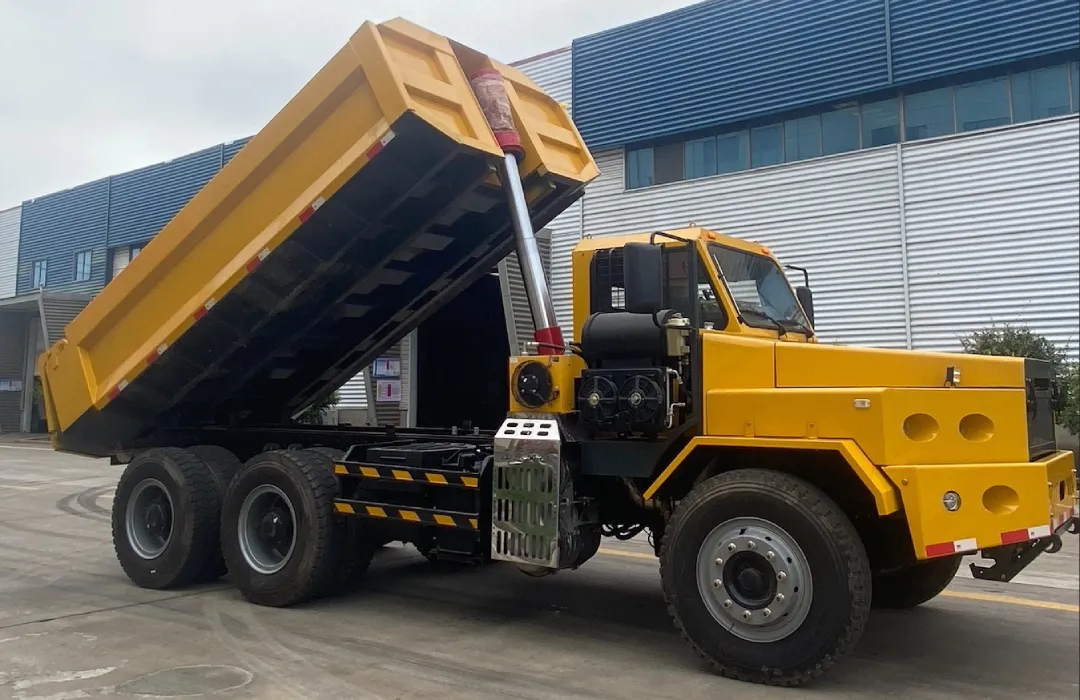
Underground mining projects rely heavily on the camion-benne as one of the core transport machines. From moving ore and coal to transporting rock in narrow tunnels, the efficiency of this vehicle directly affects productivity and operating costs. However, many mine operators face challenges such as limited tunnel space, high maintenance costs, slow hauling cycles, and poor vehicle durability. Understanding how underground haulage equipment works—and how to select the right model—can significantly improve mine efficiency and safety.
Heavy equipment used in underground environments must perform under extremely demanding conditions. Unlike open-pit operations, underground mines require compact, maneuverable machines capable of operating in confined spaces while carrying heavy loads. Equipment such as underground mining trucks, articulated mining vehicleset low-profile haulage trucks are designed specifically for these environments.
Selecting the wrong vehicle can lead to frequent breakdowns, inefficient material transport, and increased fuel consumption. Therefore, before purchasing, mine operators should evaluate several critical factors including tunnel size, payload requirements, terrain conditions, and maintenance accessibility.
Why Underground Mines Need Specialized Haulage Equipment
Transporting materials in underground mines is far more complex than surface hauling. Tunnels are often narrow, steep, and uneven, making it impossible for conventional road trucks to operate effectively.
Specialized underground transport vehicles typically feature:
- Articulated steering systems for tight turning radius
- Compact body structure to fit in narrow tunnels
- High torque engines suitable for steep gradients
- Reinforced frames to handle constant heavy loads
- Low-profile design for mines with limited height clearance
These features help improve mobility and productivity in underground mining operations.
Common Problems Mine Operators Face
Many mine owners invest in hauling equipment without fully considering the long-term operational challenges. This often leads to unexpected downtime and high operating costs.
Limited maneuverability in tunnels
Large vehicles may struggle to navigate tight underground passages. Machines without articulated frames often require wider turning space, slowing down transportation cycles.
High fuel consumption
Older equipment or poorly matched engine systems consume excessive fuel, which significantly increases operational costs over time.
Frequent maintenance and downtime
Harsh underground environments accelerate wear on hydraulic systems, transmissions, and suspension components. Poor-quality machines may require frequent repairs.
Low transport efficiency
If the vehicle’s payload capacity does not match the mine’s production scale, operators may need to increase the number of trips, which reduces overall efficiency.
Safety risks
Weak braking systems, poor visibility, or unstable chassis designs can increase accident risks in underground environments.
Key Features to Look for When Choosing a Mining Haulage Vehicle
Selecting the right machine requires careful evaluation of technical specifications and operational needs.
Payload capacity
Mines with higher production rates require vehicles capable of transporting larger loads efficiently. Common underground haulage trucks range from 10 tons to 35 tons.
Articulated chassis design
Articulated vehicles provide better flexibility in narrow tunnels and rough terrain. This design allows the front and rear sections to pivot, improving maneuverability.
Durable hydraulic system
Hydraulic lifting systems must withstand frequent dumping cycles without overheating or leaking.
Strong frame structure
Mining vehicles experience continuous vibration and heavy impacts. A reinforced steel frame ensures long service life.
Easy maintenance access
Machines designed with accessible engine compartments and modular components reduce downtime during maintenance.
How the Right Equipment Improves Mining Efficiency
Using properly designed camion-benne can dramatically improve operational performance.
Faster transport cycles
Efficient loading, hauling, and dumping reduces overall cycle time.
Lower operating costs
Fuel-efficient engines and durable components decrease long-term expenses.
Reduced equipment downtime
High-quality machines with reliable hydraulic and drivetrain systems minimize breakdowns.
Improved operator safety
Better visibility, stable chassis design, and reliable braking systems enhance underground safety conditions.
Practical Tips Before Purchasing
Mine operators should evaluate the following factors before selecting a hauling vehicle.
Measure tunnel width and height
This determines whether a camion-benne is required.
Analyze daily production targets
Payload capacity should align with the mine’s hauling demand.
Check spare parts availability
Reliable parts supply ensures quick repairs and minimal downtime.
Consider long-term maintenance costs
Sometimes a slightly higher initial investment leads to much lower operating costs over time.
Test maneuverability
If possible, reviewing real working videos or conducting field tests can help evaluate machine performance.
Future Trends in Underground Mining Transport
The mining industry is gradually moving toward more efficient and intelligent transport systems.
Electric mining vehicles are becoming more common due to their lower emissions and reduced ventilation requirements underground. Remote-controlled and semi-autonomous machines are also gaining popularity, helping improve safety and reduce labor risks.
In addition, manufacturers are focusing on stronger chassis structures, higher payload capacities, and more fuel-efficient engines to meet the growing demands of modern mining operations.
Conclusion
Choosing the right underground hauling equipment is critical for any mining project. A well-designed camion-benne improves transportation efficiency, reduces operating costs, and enhances safety in challenging underground environments.
By carefully considering tunnel conditions, payload requirements, and machine durability, mine operators can select equipment that delivers long-term reliability and higher productivity.
Articles connexes

 FR
FR  EN
EN  ES
ES  ID
ID
Poster un commentaire