


Water access is one of the biggest challenges in agriculture, construction, mining, and rural development. Choosing the right drilling machine can directly affect drilling efficiency, operating costs, and long-term profitability. Many buyers focus only on price, but the real problems often appear later — slow drilling speed, difficult maintenance, unstable performance, or inability to work in hard rock conditions.
In this guide, you will learn how to select the right water well drilling equipment, avoid common purchasing mistakes, and improve project efficiency. Whether you are a contractor, distributor, or first-time buyer, this article will help you make a smarter investment.
Why Choosing the Right Water Well Drilling Rig Matters
A water well drilling rig is not just another piece of construction equipment. It determines:
- Drilling depth capability
- Work efficiency
- Fuel consumption
- Labor cost
- Maintenance frequency
- Ability to work in different geological conditions
Many customers buy low-cost equipment without considering local soil conditions. As a result, they face problems such as slow penetration rates, excessive wear on drill bits, or machine overheating.
A high-quality hydraulic drilling rig can significantly improve productivity while reducing downtime.
Common Problems Buyers Face When Purchasing a Drilling Rig
Low Drilling Efficiency
Some machines perform well in soft soil but struggle in hard rock formations. This causes delays and increases operational costs.
Expensive Maintenance
Poor-quality hydraulic systems and unreliable diesel engines often lead to oil leakage, overheating, and frequent repairs.
Lack of Technical Support
Many buyers worry about spare parts availability and after-sales service, especially when importing machinery from overseas suppliers.
Wrong Model Selection
Not every drilling project requires the same machine. Choosing equipment with insufficient drilling depth or inadequate torque can lead to project failure.
How to Choose the Best Drilling Machine for Your Project
Selecting the correct drilling machine depends on several key factors.
Understand Your Drilling Depth Requirements
Different projects require different drilling capacities.
Typical applications include:
- 100–150 meters for agricultural irrigation
- 150–300 meters for residential water wells
- 300+ meters for industrial or mining projects
Always choose a machine with slightly higher capacity than your actual requirement to ensure stable performance.
Analyze Ground Conditions
Ground conditions determine the drilling method and drill bit selection.
Common formations include:
- Clay
- Sand
- Gravel
- Limestone
- Hard rock
For hard rock drilling, a DTH drilling rig with strong rotary torque and air compressor support is usually recommended.
Check Power and Hydraulic System Quality
A reliable hydraulic system improves drilling stability and reduces machine failure rates.
Important features to evaluate:
- Hydraulic oil cooling system
- Rotary head torque
- Feed cylinder strength
- Diesel engine brand
- Walking system stability
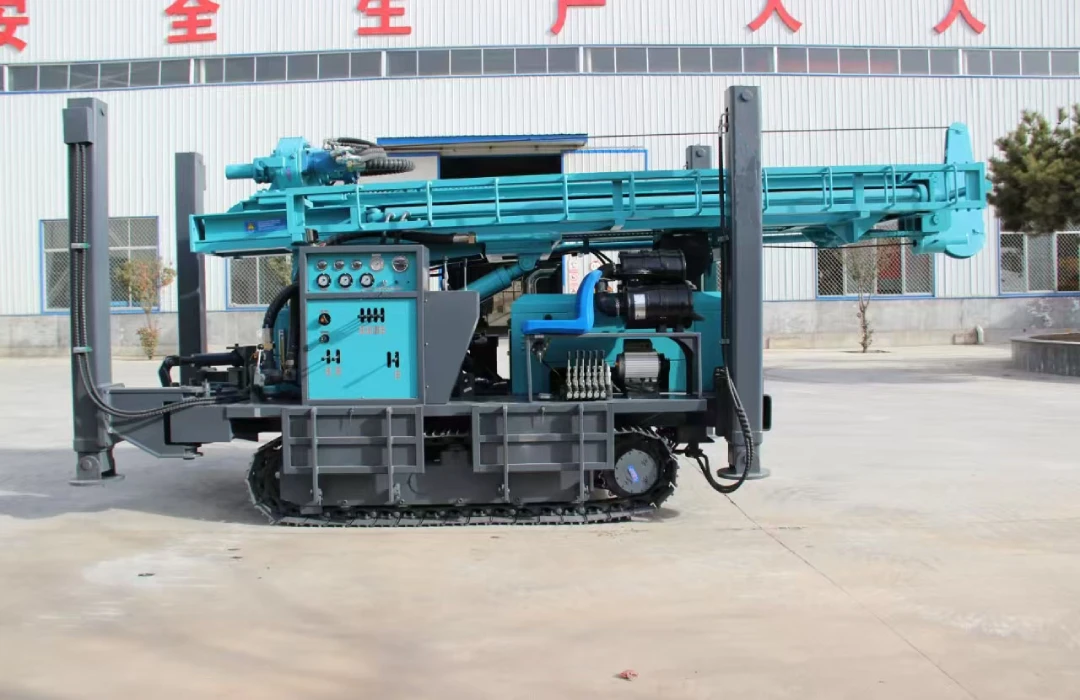
Crawler mounted drilling rigs are especially popular because they can work in rough terrain and remote areas.
Mobility and Transportation
If your projects frequently change locations, transportation becomes extremely important.
Truck mounted drilling rigs are suitable for long-distance movement, while crawler drilling rigs provide better off-road performance.
Portable water well drilling rigs are ideal for rural projects with limited access roads.
Important Features Modern Water Well Drilling Equipment Should Have
Today’s professional drilling equipment includes many advanced features designed to improve efficiency and reduce labor costs.
Remote Control Operation
Remote control systems improve operator safety and simplify machine movement in difficult environments.
Automatic Pipe Handling
Automatic rod changing systems reduce manual labor and increase drilling speed.
High Torque Rotary Head
A strong rotary system allows the machine to drill through complex geological layers more efficiently.
Multi-Function Capability
Modern machines can often handle:
- Water well drilling
- Solar pile installation
- Geological exploration
- Foundation drilling
This versatility helps contractors maximize equipment utilization.
Hydraulic vs Pneumatic Drilling Systems
Both systems have advantages depending on project conditions.
Hydraulic Drilling Rigs
Advantages:
- Stable operation
- Better precision
- Lower noise
- Easier control
Best for:
- Water well projects
- Urban construction
- Medium-depth drilling
Pneumatic Drilling Rigs
Advantages:
- Strong rock drilling capability
- Faster penetration in hard formations
Best for:
- Exploitation minière
- Hard rock drilling
- Deep boreholes
Many modern drilling machine models combine hydraulic and pneumatic systems for better flexibility.
How to Reduce Operating Costs in Water Well Drilling
Many contractors focus only on machine purchase price, but long-term operational cost is more important.
Here are practical ways to save money:
Perform Regular Maintenance
Routine maintenance helps prevent expensive breakdowns.
Important checks include:
- Hydraulic oil replacement
- Air filter cleaning
- Lubrication inspection
- Drill pipe wear monitoring
Use the Correct Drill Bit
Using the wrong drill bit can dramatically reduce drilling speed and increase fuel consumption.
Train Operators Properly
Experienced operators improve efficiency and reduce unnecessary machine damage.
Why Crawler Water Well Drilling Rigs Are Popular
Crawler type rigs have become increasingly popular in global markets because they offer:
- Strong climbing ability
- Stable operation
- Better mobility in muddy or mountainous areas
- Easier transportation on rough terrain
For countries with complex road conditions, crawler drilling rigs are often the preferred solution.
Questions Buyers Should Ask Before Ordering
Avant d'acheter un drilling machine, buyers should ask suppliers these important questions:
- What is the maximum drilling depth?
- What rock hardness can the machine handle?
- Are spare parts available locally?
- Is operator training provided?
- What type of air compressor is required?
- How long is the delivery time?
- Does the supplier provide technical support?
Reliable manufacturers will always provide detailed answers and real project references.
Réflexions finales
Investir dans le bon drilling machine is critical for improving drilling efficiency, reducing maintenance costs, and increasing project profitability. A good water well drilling rig should match your geological conditions, drilling depth requirements, and transportation needs.
Instead of focusing only on low prices, buyers should evaluate machine durability, hydraulic system quality, after-sales support, and long-term operating costs.
With the right equipment, contractors can complete projects faster, reduce downtime, and gain a stronger competitive advantage in the water well drilling industry.
Articles connexes

 FR
FR  EN
EN  ES
ES  ID
ID
Poster un commentaire