


In the fields of mineral exploration, geological surveying, and mining development, the core drilling rig plays a critical role. It is one of the most important pieces of equipment used to obtain accurate underground rock samples, helping engineers and geologists understand subsurface conditions before large-scale construction or mining begins.
This article will give you a clear and practical introduction to core drilling rigs, including how they work, where they are used, and how to choose the right model for your project.
What Is it?
A core drilling rig is a type of drilling machine designed to extract cylindrical rock samples (core samples) from underground formations.
Unlike conventional drilling equipment that only creates holes, a core drilling rig focuses on preserving the integrity of the rock structure. These samples are then used for detailed analysis of:
- Rock composition
- Geological structure
- Mineral content
- Groundwater conditions
- Engineering stability
In simple terms, a core drilling rig is a precision tool for underground geological investigation.
How Does a Core Drilling Rig Work?
The working principle of it is based on rotary drilling with core sampling:
- Rotary drilling action
The drilling system rotates the drill rod and bit at high speed. - Ring-shaped cutting
A diamond or carbide drill bit cuts around the rock formation. - Core formation
The central rock column remains intact and enters the core barrel. - Core recovery
The drill string is lifted section by section to retrieve the rock core samples.
This process ensures high-quality geological data with minimal disturbance to the rock structure.
Applications of Core Drilling Rigs
Core drilling rigs are widely used across multiple industries:
1. Mineral Exploration
Used to explore gold, copper, coal, iron ore, and other mineral deposits. It helps determine ore grade, depth, and distribution.
2. Geological Survey
Provides essential data for mapping underground formations and geological structures.
3. Mining and Resource Development
Supports mine planning, feasibility studies, and safety evaluation.
4. Infrastructure Construction
Used before building tunnels, highways, railways, and dams to assess ground stability.
5. Hydrological and Energy Projects
Applied in groundwater investigation, geothermal exploration, and energy resource development.
Types of Core Drilling Rigs
Different working environments require different types of rigs:
1. Portable Core Drilling Rig
- Lightweight and easy to transport
- Suitable for mountainous or remote areas
- Ideal for shallow exploration projects
2. Truck-Mounted Core Drilling Rig
- Installed on truck chassis
- Fast mobility and high efficiency
- Suitable for medium-depth drilling projects
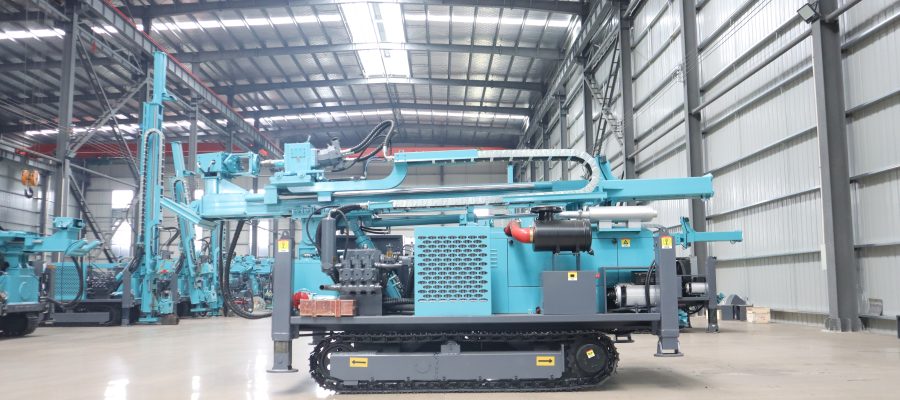
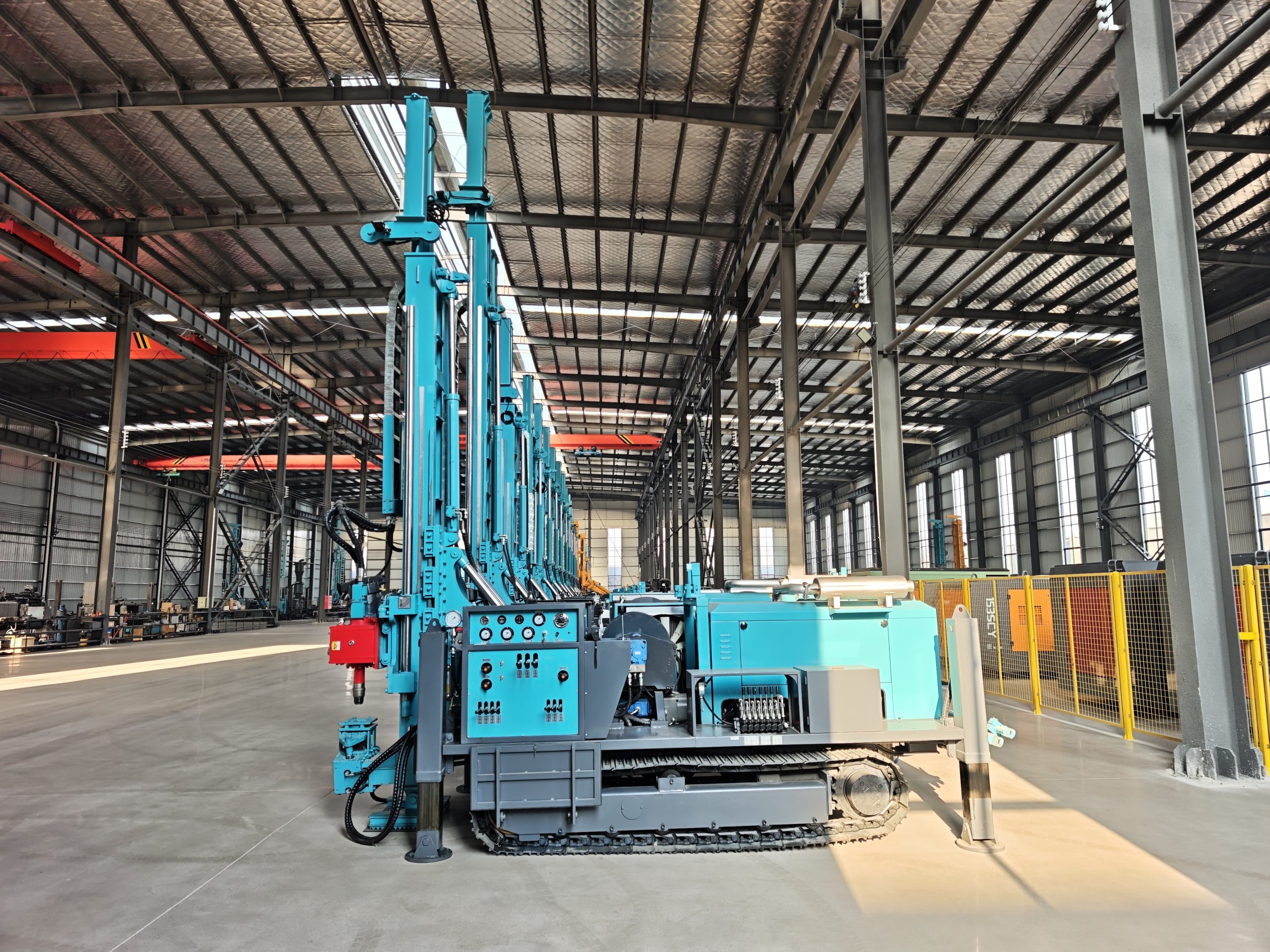
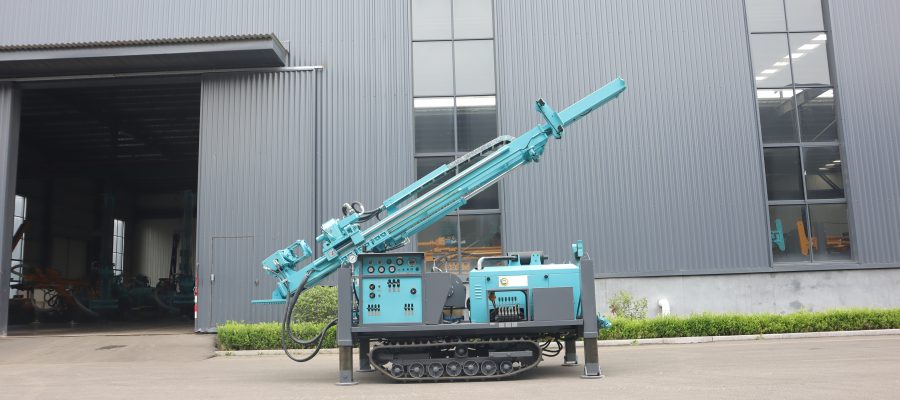
3. Crawler Core Drilling Rig
- Equipped with rubber or steel tracks
- Excellent for muddy, rocky, and uneven terrain
- High stability and strong adaptability
This is one of the most commonly used types in mining areas.
4. Deep Hole Core Drilling Rig
- Designed for deep exploration (1000m+ or more)
- High torque and powerful hydraulic system
- Used in large-scale mining and scientific research projects
Key Performance Factors
When selecting a core drilling rig, the following parameters are essential:
1. Drilling Depth Capacity
Typical ranges include:
- 100–300 meters (shallow exploration)
- 300–1000 meters (medium-depth projects)
- 1000+ meters (deep exploration)
2. Torque and Power System
Higher torque allows drilling through hard rock formations such as granite and basalt.
3. Drilling Method
Common methods include:
- Wireline core drilling
- Hydraulic head drive drilling
- Diamond drilling technology
Each method suits different geological conditions.
4. Mobility and Terrain Adaptability
- Crawler type for rough terrain
- Truck-mounted type for road-accessible areas
- Portable type for remote field exploration
5. Supporting Equipment
Efficiency depends on auxiliary systems such as:
- Mud pump
- Air compressor
- Drill rods and core barrels
How to Choose the Right Core Drilling Rig
To select the right machine, consider your project requirements:
- Rough mining terrain → Crawler core drilling rig
- Accessible flat areas → Truck-mounted rig
- Small-scale exploration → Portable rig
- Deep exploration projects → Deep hole drilling rig
Also consider:
- Budget and operating cost
- Spare parts availability
- Maintenance support
- Local working conditions
Future Trends of Core Drilling Technology
They are evolving rapidly toward:
- Smart digital control systems
- Higher drilling depth capacity
- Modular and easy-transport designs
- Energy-efficient hydraulic systems
- Integrated drilling and data monitoring
Modern rigs are no longer just drilling machines—they are becoming intelligent geological data collection systems.
Conclusion
Core drilling rigs are essential equipment for modern mineral exploration and geotechnical engineering. They provide reliable underground data that directly affects mining efficiency, construction safety, and project success.
Choosing the right core drilling rig can significantly improve productivity and reduce operational risks.
If you are looking for a reliable manufacturer of core drilling rigs for mining, exploration, or construction projects, selecting a supplier with strong engineering capability and export experience is crucial.
Articles connexes

 FR
FR  EN
EN  ES
ES  ID
ID
Poster un commentaire