


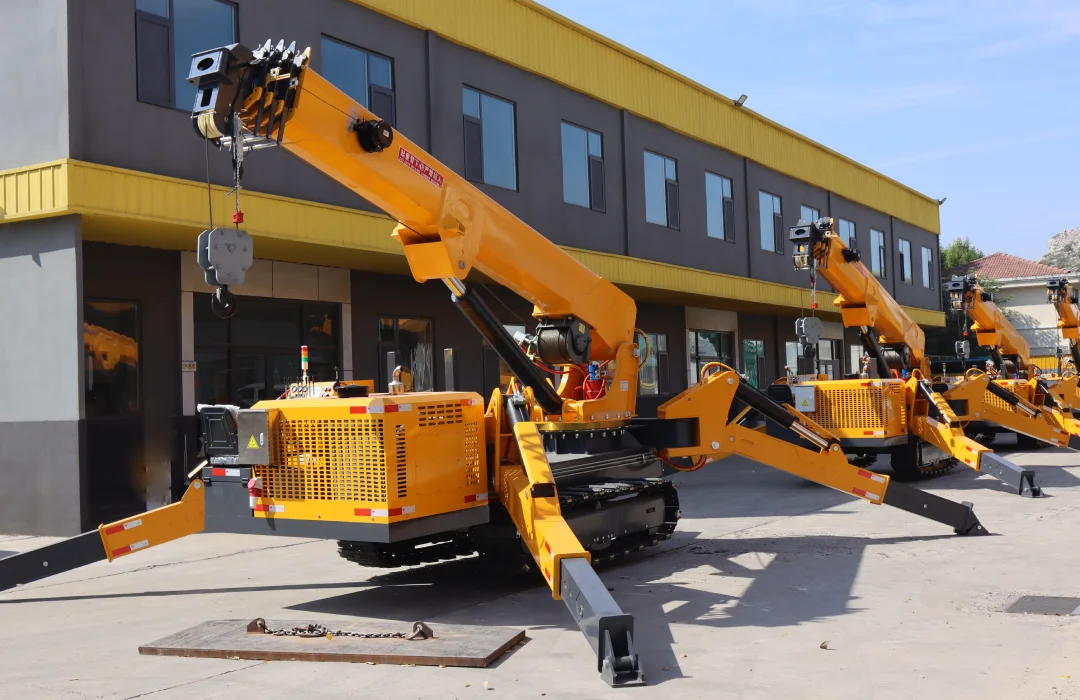
Modern construction and industrial projects often involve lifting tasks in places where traditional cranes simply cannot work. Rooftops, indoor facilities, narrow alleys, glass installation sites, and complex maintenance environments all require compact yet powerful lifting equipment. This is why choosing the right spider crane manufacturer has become increasingly important for contractors, rental companies, and industrial service providers.
A high-quality spider crane does more than lift heavy materials. It improves safety, reduces labor costs, shortens project timelines, and allows operators to complete jobs in areas with limited access. However, many buyers struggle with unreliable machines, difficult maintenance, weak after-sales support, or cranes that fail under demanding conditions.
This guide explains how to evaluate a spider crane supplier, what technical features truly matter, and how to avoid costly purchasing mistakes.
Why Spider Cranes Are Becoming Essential in Modern Construction
Traditional lifting equipment is often too large for confined job sites. In many urban projects, space restrictions create major operational challenges. Compact lifting machines are now widely used because they can enter buildings, pass through narrow doors, and work in sensitive environments.
Spider cranes are commonly used for:
- Glass curtain wall installation
- Steel structure lifting
- Indoor factory maintenance
- Power station projects
- High-rise construction
- Railway and subway maintenance
- Equipment installation in tight spaces
Unlike large truck cranes, spider cranes combine compact dimensions with strong lifting capacity. Many contractors now prioritize compact lifting equipment when working in cities or indoor environments.
This growing demand has increased competition among every major spider crane manufacturer, making product quality and technical support more important than ever.
The Biggest Problems Buyers Face When Purchasing Spider Cranes
Many customers focus only on price during the purchasing process. While low-cost equipment may seem attractive initially, it often creates serious long-term problems.
Common issues include:
Poor Stability During Lifting
Some cranes use low-quality steel structures or weak hydraulic systems. This can result in dangerous instability when lifting heavy loads at full extension.
Lack of Spare Parts
A machine becomes useless if replacement parts are unavailable. Buyers frequently complain about long delivery times for hydraulic components, tracks, or electronic systems.
Weak After-Sales Service
Technical support is critical for lifting equipment. Many suppliers disappear after delivery, leaving customers without troubleshooting assistance or maintenance guidance.
Complicated Operation
Operators prefer equipment that is easy to learn and efficient to use. Poor control systems increase labor costs and reduce productivity.
Limited Working Environment Adaptability
Not all cranes perform well on rough terrain, uneven ground, or indoor flooring. Choosing the wrong machine can severely limit project capability.
A professional spider crane manufacturer should solve these issues instead of creating new operational risks.
Key Features to Look for in a Spider Crane
Before purchasing a crane, buyers should evaluate several important technical factors.
Diseño compacto
A true mini spider crane should fit through narrow passages and operate in restricted environments. Compact dimensions are especially important for indoor construction projects.
Strong Lifting Capacity
Lifting performance should remain stable even at extended boom lengths. Buyers should compare maximum lifting height, working radius, and load charts carefully.
Remote Control Operation
Remote-controlled spider cranes improve safety and precision. Operators can monitor lifting angles and load movement more effectively from a safe distance.
Outrigger Stability
High-quality outriggers provide better balance on uneven surfaces. Flexible outrigger positioning is essential for confined job sites.
Electric and Diesel Power Options
Many indoor projects require low-noise and emission-free operation. Electric spider cranes are increasingly popular for shopping malls, hospitals, and factories.
Easy Transportation
Compact crawler cranes should be easy to transport between job sites without excessive logistics costs.
When evaluating equipment, experienced buyers often compare multiple models from different suppliers before selecting the best spider crane manufacturer for their market needs.
Industries That Depend on Spider Cranes
Spider cranes are no longer limited to construction companies. Many industries now rely on compact lifting solutions.
Glass Installation Industry
Glass panels are heavy, fragile, and difficult to position accurately. Spider cranes provide precise lifting control for curtain wall installation.
Related keyword: glass installation crane
Industrial Maintenance
Factories frequently require equipment replacement in confined spaces where overhead cranes cannot reach.
Power and Energy Projects
Power stations and renewable energy projects often require compact lifting machines for equipment installation and maintenance.
Rental Businesses
Rental companies prefer versatile cranes that can handle multiple applications across different industries.
How a Good Spider Crane Improves Project Efficiency
Many contractors underestimate how much lifting equipment affects overall project performance.
A reliable spider crane can:
- Reduce manual labor requirements
- Minimize project delays
- Improve worker safety
- Lower transportation costs
- Access previously unreachable work areas
- Increase lifting precision
For example, in glass installation projects, traditional cranes may require road closures or large operating areas. Compact spider cranes can often complete the same work with fewer logistical complications.
This efficiency advantage is one reason why demand for experienced spider crane manufacturer companies continues to rise globally.
Important Questions to Ask Before Buying
Before choosing a supplier, buyers should ask detailed technical and service-related questions.
What Is the Actual Load Capacity?
Always request official load charts instead of relying on marketing claims.
Is Operator Training Available?
Training improves safety and reduces machine misuse.
Are Spare Parts Available Locally?
Fast spare parts support minimizes downtime.
What Certifications Does the Machine Have?
Check for CE certification or other regional compliance standards.
How Long Is the Warranty?
Reliable manufacturers stand behind product quality with clear warranty policies.
Can the Machine Be Customized?
Some projects require special attachments, baskets, or non-marking tracks.
A trustworthy spider crane manufacturer should provide transparent answers and technical documentation without hesitation.
Future Trends in Spider Crane Technology
The spider crane industry continues to evolve rapidly.
Several important trends include:
Intelligent Control Systems
Modern cranes increasingly use digital monitoring systems for safer lifting operations.
Lightweight High-Strength Materials
Advanced steel and structural design improve lifting performance while reducing overall machine weight.
Electric Spider Cranes
Environmental regulations are driving demand for low-noise, zero-emission lifting equipment.
Remote Diagnostics
Some manufacturers now offer remote troubleshooting and maintenance monitoring.
Companies investing in advanced engineering and product innovation will likely dominate the future compact lifting equipment market.
Reflexiones finales
Choosing the right spider crane is not simply about buying lifting equipment. It is about improving safety, increasing efficiency, and ensuring reliable project performance over the long term.
The best machines combine compact design, stable lifting capability, durable hydraulic systems, and dependable after-sales support. Buyers who focus only on low prices often face higher maintenance costs, project delays, and operational problems later.
A professional spider crane manufacturer should act as a long-term equipment partner rather than just a seller. By carefully evaluating machine quality, technical specifications, and service capability, contractors and rental businesses can make smarter investment decisions and gain a stronger competitive advantage in the lifting industry.
Entradas relacionadas

 ES
ES  EN
EN  ID
ID  FR
FR
Publicar un comentario