


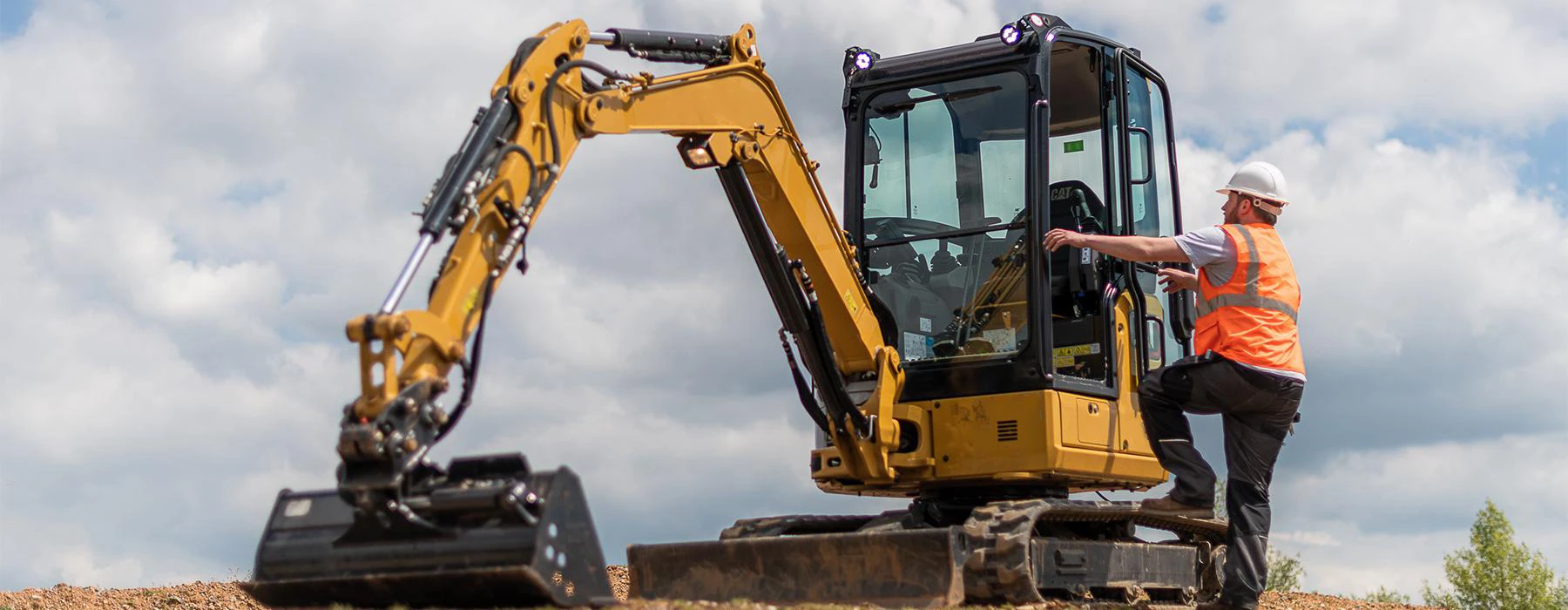
The selection of the correct heavy machinery is essential for the efficiency, success and profit for any mining or construction support work. Smaller, and the time and capacity are lost Too large and there are issues related to access transportation, as well as unnecessary cost. This 3.5 ton mini excavators is a well-known class, providing a convincing mix of performance and resiliency. Is it the ideal choice for you particular needs?
This article will explore the features, capabilities and the most important decision-making elements related to this 3.5-ton excavator classification. This guide will help you determine whether this machine is compatible to your needs for the project specifically in the arduous environment of mining and construction areas. Being a committed manufacturer of high-quality equipment Unite Machinery understands that it’s crucial to choose the appropriate tool for the task at hand.
What Exactly Defines a 3.5 Ton Small Excavator?
In in the “mini” or “compact” Excavator segment such as the 3.5-ton model (approximately 7,200-8,000 pounds or 3,200-3,600 kg of operating weight) makes a substantial leap over micro-excavators and being significantly smaller than conventional-sized machines. They are usually diesel powered machines typically available in Crawler Excavavator models. They offer superior grip and stability over the diverse types of terrain common to construction sites and other mining regions that have a peripheral dimension. They can bridge the gap between mining and construction, providing a substantial force of digging and reach but without the massive footprint of their larger siblings.
Key Capabilities and Strengths: Why Choose a 3.5 Ton Machine?
The success of the 3.5-ton compact excavator doesn’t come from a lack of. It is the result of a mix of unique characteristics that makes it extremely efficient for many jobs:
- Amazing Power-to-Size Ratio Do not believe you let the “small” label fool you. Excavators with this size pack a powerful power, able of digging in depths that range from 9-12 feet (approx. 2.7 up to 3.7 meters) as well as handling large bucket load. They can tackle tasks that smaller machines aren’t able to tackle efficiently.
- Improved Maneuverability When compared to the larger excavators the 3.5-ton class is a winner in tight space. Their small footprint, and frequently lower or no tail swing design allows the operation of these machines in construction sites that are crowded or within construction structures (for demolition) as well as in the restricted areas in auxiliary zones in mining operations.
- versatility through attachments: A key strength is the capability to use different hydraulic attachments. Apart from the standard digging buckets, they are able to be power breakers for demolition, or for broken rock and augers for drilling post holes, or feet, grapples for materials handling and much more. The flexibility of this machine makes it equipped to perform multiple functions at the site.
- Transporting Easier: Moving a 3.5-ton excavator across job sites is much simpler and cheaper than moving more heavy equipment. It is often towed with a large-duty truck the appropriate trailer, which reduces dependence on special Heavy haulage companies. This is an important benefit for contractors who are moving between smaller tasks.
- Lower Site Impact The lower weight of their operation means less pressure on the ground as compared to larger machines and minimizes the damage caused to completed terrains, fragile landscapes or ground that has been compacted, which could be critical when it comes to urban construction and project remediation of sites.
Common Projects and Applications (Construction & Mining Focus)
What is the place where the 3.5-ton mini excavators excel? Here are some of the most common uses that are particularly relevant to the areas that Unite Machinery’s attention is focused on:
- Utility Trenching The ideal tool for making trenches for electric drainage pipes, conduits and communications cables at construction sites and around mine infrastructure. The precision of their work is crucial in areas where utilities are located.
- small foundation digging The ability to excavat foundations for smaller structures extension, walls, the walls that restraining them, and pads for equipment.
- Site Preparation and Grading Utilized for smaller grading projects such as clearing the debris and leveling areas for concrete pours or for preparing the site prior to a specialist equipment, such as an drilling rig or hydraulic solar pile driver is used.
- Landscape Projects: Effectively manages tasks such as the digging for pools, building huge landscape elements, shifting dirt, and laying rocks.
- Small-Scale Demolition If equipped with the hydraulic breaking machine, it is able to efficiently demolish concrete structures, asphalt or smaller structures.
- Mining Support Jobs Although not ideal for mining as a primary process, they can be useful for additional tasks that are required around mining sites: digging drainage ditches, helping cleaning up the site as well as loading small support vehicles (though it is unlikely to be a massive 15-ton dumper truck) as well as the general excavation of maintenance. They are able to work with bigger primary equipment, such as mining dump truck fleets as well as the Mucking Loader activities for tasks of support.
- Road Work Aid It is useful for repair of curbs, minor asphalt removal (with the right tools) in conjunction with machines such as the road Cutting Machine.
Factors to Consider: Making the Right Choice
We’ll now tackle the most important issue: How do you determine whether a 3.5-ton small excavator would be the best option for the needs of your task? Take into consideration these important elements:
| Factor | Considerations for a 3.5 Ton Excavator | Questions to Ask Yourself |
|---|---|---|
| Project Scale | It is suitable for medium-sized to small tasks. Highly efficient for the depth of 10-12 feet. | What’s the necessary quantity and depth of digging? Do you require bulk earthmoving? |
| Site Access | Fantastic maneuverability even in small areas; less possibilities of tail swing. | How big is your space? Do you have overhead obstacles? Do you need to consider ground pressure? |
| Digging Conditions | It can handle different soil types. the rock might require an attachment for a breaker. | What kind of material requires excavation? Are you digging compacted soil, clay, or rock? |
| Lifting Needs | Capacity for lifting moderately (check particular model specifications). | What kinds of materials require lifting (pipes and tiny structures)? What are the weights? |
| Transportation | Transporting it is fairly simple with a trucks and trailers. | What frequency will the machine be moving between locations? What is the best way to transport it? |
| Required Attachments | Accepts all commonly used attachments (breakers and augers). | What other specific jobs besides digging will be needed? Do the excavators support these tasks? |
| Budget | Costs of running and initial costs lower over larger excavators, and higher than micros. | What is the total budget for purchase, rent and operation? |
| Operator Availability | It generally requires less instruction than machines with large capacities however, it requires some skill. | Are there operators who are trained for this type of class? |
Hui Chu Dao Shi Suan Biao
Consider your usual tasks. If they frequently include utility work, tiny landscaping, foundations or other tasks that require space regions, the 3.5-ton excavator is an extremely efficient and economical option. If, however, your main project involves excavation that is deep as well as bulk earthmoving and massive lifting, a bigger excavator is likely to be required.
Comparison of: 3.5 Tons vs. Other Excavators Sizes
Understanding how the 3.5-ton can be placed in relation to other sizes can help clarify its purpose:
- vs. micro/mini excavators (< 2.5 tons ): Smaller machines are superior in areas with restricted access (e.g. indoor demolition, gates for backyard). They lack access to the depth of digging, range and strength that the 3.5-ton model for bigger jobs.
- vs. larger Compact excavators (5-8 ton ): They’re best suitable for bigger foundations, medium earthmoving in bulk, as well as heavier lifting work. They do require room to move and can be more difficult to move.
The 3.5-ton excavator is often in”the “sweet spot,” providing significant capacity enhancement over smaller machines, with the accessibility and transportation restrictions of larger compact models.
The Importance of Quality and Reliability
If you are investing in equipment such as an excavator specifically for challenging mining and construction conditions, selecting a reliable company is crucial. Reliability, durability, and the availability of parts and services can be crucial to minimize time in the field and increasing your investment return. Firms such as Unite Machinery build machines that is designed for harsh conditions, knowing that dependability is essential when time-bound deadlines and efficiency of operations are at stake. Choose a company that is recognized for top-quality construction as well as reliable service. For information on particular safety rules that apply to excavations, tools such as OSHA’s Occupational Safety and Health Administration (OSHA) can provide useful information ( OSHA Trenching and Excavation Safety).
Conclusion: Is It Your Go-To Machine?
Then, is the 3.5 ton excavator an appropriate choice for your needs?
It is likely to be when:
- The projects you work on typically require working within restricted or confined access zones.
- A versatile machine is required for projects like trenching small foundations, landscaping and even site support.
- Transporting between job places is a major aspect.
- It is important to find a balance of powerful digging capabilities as well as a compact footprint.
- The tasks you perform are often enhanced by the use of various hydraulic attachments.
It may not be the first choice in cases where:
- Your primary job involves massive excavations or constant lifting.
- Access to the site is very restricted and will require the use of a micro-excavator.
- Most of your tasks require the capability and power of a five-ton+ machine.
The 3.5-ton compact excavator can be described as a extremely versatile and powerful machine. It is the primary part of the equipment for several construction companies and also as an essential aid in mining activities. If you take the time to evaluate your demands for the project by analyzing the elements discussed above and analyzed, you’ll be able to decide whether this class of excavator is a good choice for your company’s fleet.
Do you want to look into high-quality, robust excavators? Go to Unite Machinery to explore our selection of mining and construction equipment, which includes the most reliable excavators models that are built for high-performance.
Related Posts

 EN
EN  ES
ES  ID
ID  FR
FR
Post a Comment