


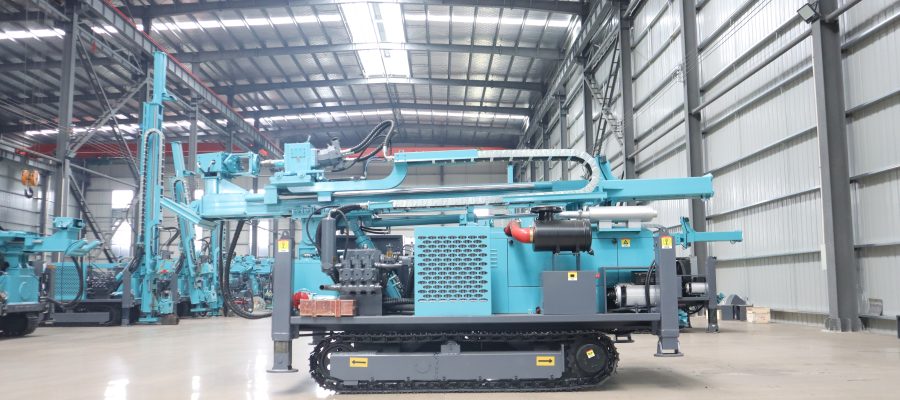
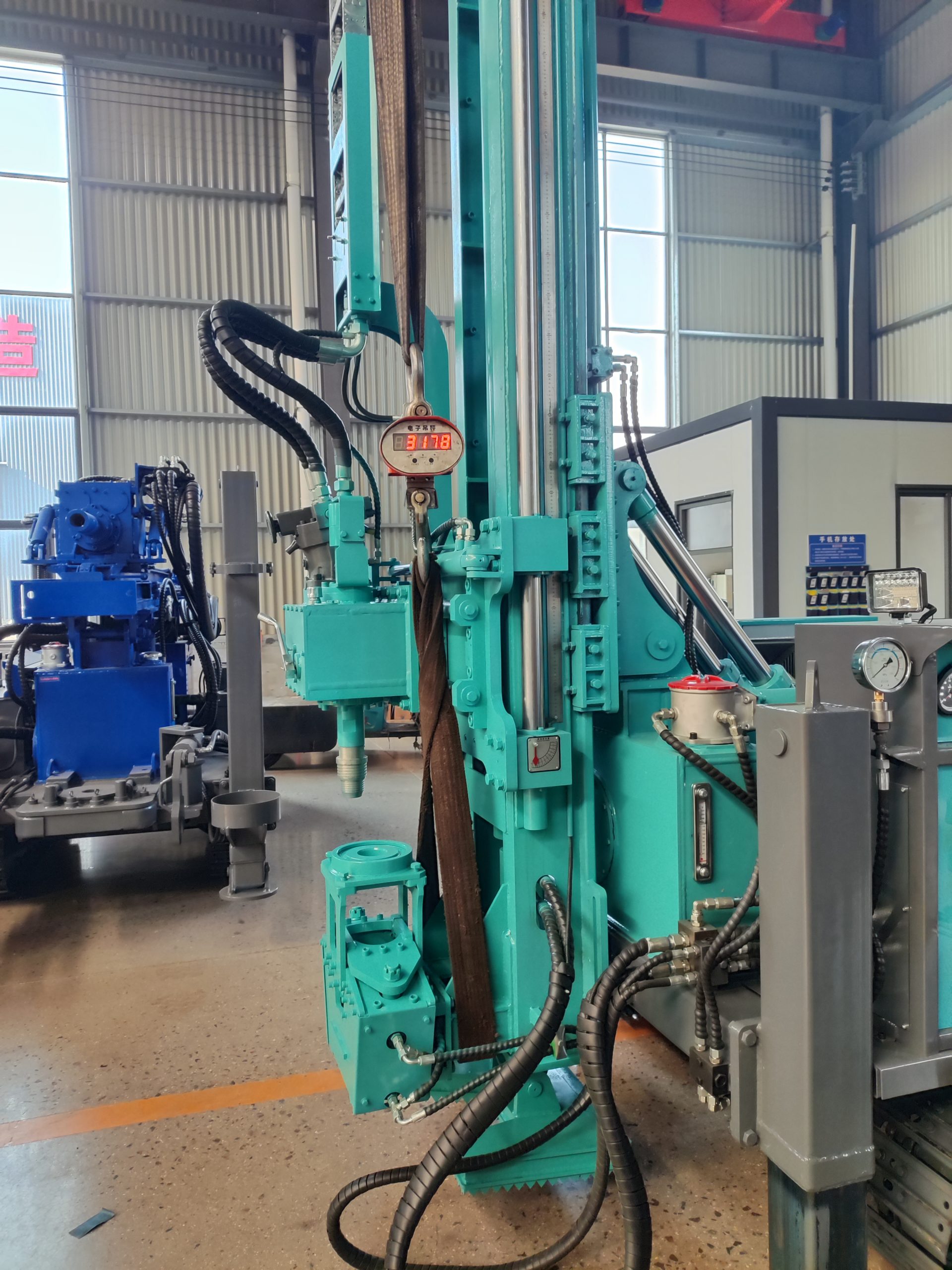
A core drilling rig is a high-precision drilling system designed to obtain continuous, intact rock core samples from underground formations. It is one of the most critical machines in mineral exploration, geotechnical investigation, and underground engineering.
Compared with conventional drilling equipment, core drilling rigs are not only about drilling depth—they are about data quality, geological accuracy, and formation integrity. The core samples they extract directly determine how engineers evaluate mining potential, construction safety, and underground risks.
This article provides a more in-depth understanding of core drilling rigs from a technical and application perspective.
1. What Makes a Core Drilling Rig Different?
The core drilling rig is specifically engineered to achieve one goal:
👉 extract undisturbed rock cores while minimizing structural damage
This is fundamentally different from rotary drilling or percussion drilling, which focus mainly on penetration speed.
Core drilling rigs emphasize:
- High-quality sample integrity
- Precise formation analysis
- Controlled drilling pressure and speed
- Stable torque transmission
- Minimal vibration impact on rock structure
Because of this, core drilling is considered the most reliable geological sampling method in mining and engineering geology.
2. Core Drilling System: How It Works (Technical View)
A core drilling rig is composed of multiple integrated subsystems working together:
2.1 Power System
Typically powered by diesel engines or electric motors, the system drives:
- Pompes hydrauliques
- Rotary head or top drive
- Hoisting mechanism
The power system determines torque stability and drilling depth capability.
2.2 Rotary Drilling Mechanism
There are two main configurations:
- Top Drive System (Hydraulic Head Drive)
Provides high torque and better control for deep drilling. - Spindle/Rotary Table System
Traditional system suitable for medium-depth projects.
The rotary system controls drill rod rotation speed, which is critical for maintaining core quality.
2.3 Core Barrel Assembly
This is the most important part of the system.
It includes:
- Inner tube (for core preservation)
- Outer tube (for protection and rotation)
- Core lifter (to retain rock samples)
The core barrel ensures that the rock sample is extracted in a continuous cylindrical form without breaking.
2.4 Drilling Bit (Diamond Core Bit)
Most modern rigs use:
- Diamond-embedded drill bits for hard rock
- Tungsten carbide bits for medium-hard formations
Diamond bits allow:
- High wear resistance
- Stable cutting performance
- Better core recovery rates
2.5 Mud Circulation System
Drilling fluid plays a key role in:
- Cooling the drill bit
- Removing rock cuttings
- Stabilizing borehole walls
- Reducing friction and vibration
Poor mud control often leads to core loss or hole collapse.
3. Core Drilling Process: Step-by-Step Workflow
A professional core drilling operation typically follows this cycle:
- Positioning & anchoring the rig
Stability is essential for deep drilling accuracy. - Drilling pilot hole
Establishes initial borehole alignment. - Core drilling operation
Continuous rotary cutting with controlled pressure. - Core recovery cycle
Inner tube is retrieved periodically to extract rock samples. - Core sample handling
Samples are labeled, stored, and transported for laboratory testing.
This cycle repeats until target depth is reached.
4. Industrial Applications (Advanced Perspective)
Core drilling rigs are not limited to mining—they are essential in high-value engineering decisions.
4.1 Mineral Exploration (Primary Application)
Used for evaluating:
- Ore grade distribution
- Mineral continuity
- Deposit depth and geometry
- Structural faults and fractures
This directly determines whether a mining project is economically viable.
4.2 Geotechnical Engineering
Core samples are used to analyze:
- Rock mass classification (RMR)
- Soil/rock stability
- Load-bearing capacity
- Slope and foundation safety
This is critical for dams, tunnels, and high-rise foundations.
4.3 Deep Infrastructure Projects
Before tunnel boring or underground excavation:
- Core drilling identifies fault zones
- Detects water-bearing layers
- Prevents collapse risks
4.4 Energy & Environmental Projects
Core drilling supports:
- Geothermal reservoir evaluation
- Carbon storage studies (CCS)
- Groundwater resource mapping
- Environmental impact assessment
5. Types of Core Drilling Rigs (Engineering Classification)
5.1 Portable Core Drilling Rig
Designed for:
- Remote exploration
- Mountainous terrain
- Small-scale sampling
Pros:
- Lightweight
- Easy transport
- Low operational cost
5.2 Truck-Mounted Core Drilling Rig
Designed for:
- Road-accessible exploration zones
- Medium-depth drilling projects
Pros:
- High mobility
- Fast relocation
- Efficient field operations
5.3 Crawler Core Drilling Rig (Most Common Type)
Designed for:
- Mining areas
- Forests, deserts, and rough terrain
Pros:
- Strong ground adaptability
- High stability during deep drilling
- Suitable for long-duration operations
This is the most widely used configuration in global mining exploration.
5.4 Deep Hole Core Drilling Rig
Designed for:
- Deep mineral deposits
- Scientific drilling programs
- Strategic resource exploration
Features:
- High torque hydraulic system
- Reinforced mast structure
- Advanced wireline core retrieval system
- Depth capability often exceeding 1000–2000m
6. Key Technical Performance Indicators
When evaluating a core drilling rig, professionals focus on:
6.1 Torque Output Stability
Stable torque ensures:
- Consistent drilling speed
- Reduced core breakage
- Better penetration in hard rock
6.2 Hole Depth Capacity
Depth capability depends on:
- Mast strength
- Drill rod system
- Hydraulic power efficiency
6.3 Core Recovery Rate
A high-quality rig should achieve:
- High core integrity (>90% in good conditions)
- Minimal fragmentation
- Continuous sample retrieval
6.4 Drilling Angle Flexibility
Advanced rigs support:
- Vertical drilling
- Inclined drilling
- Directional adjustments
6.5 System Reliability
Includes:
- Hydraulic system durability
- Engine stability
- Spare parts availability
- Cooling efficiency in harsh environments
7. Operational Challenges in Real Projects
Even high-quality rigs face field challenges:
- Hard rock formations (granite, basalt)
- Broken or fractured zones
- Water-bearing unstable layers
- High temperature underground conditions
- Long-distance remote operations
Professional operators adjust:
- Rotation speed
- Feed pressure
- Mud viscosity
- Bit selection
to maintain core quality.
8. Future Development of Core Drilling Technology
Core drilling rigs are evolving toward:
- Digital drilling monitoring systems (real-time torque, pressure, depth tracking)
- Automated rod handling systems
- Higher-efficiency diamond drilling technology
- Modular rig design for fast transportation
- Lower fuel consumption hydraulic systems
- Integrated geological data collection platforms
The future core drilling rig is no longer just a machine—it is becoming a data-driven geological exploration system.
Conclusion
Core drilling rigs remain the most reliable technology for obtaining accurate underground geological information. Their role in mining exploration, infrastructure safety, and energy development is irreplaceable.
A well-configured core drilling rig not only improves drilling efficiency but also ensures high-quality geological data, safer engineering decisions, and lower exploration risk.
If you are selecting a core drilling rig for mining or exploration projects, focus on depth capacity, core recovery quality, hydraulic stability, and terrain adaptability—these factors determine long-term project success.
Articles connexes

 FR
FR  EN
EN  ES
ES  ID
ID
Poster un commentaire