


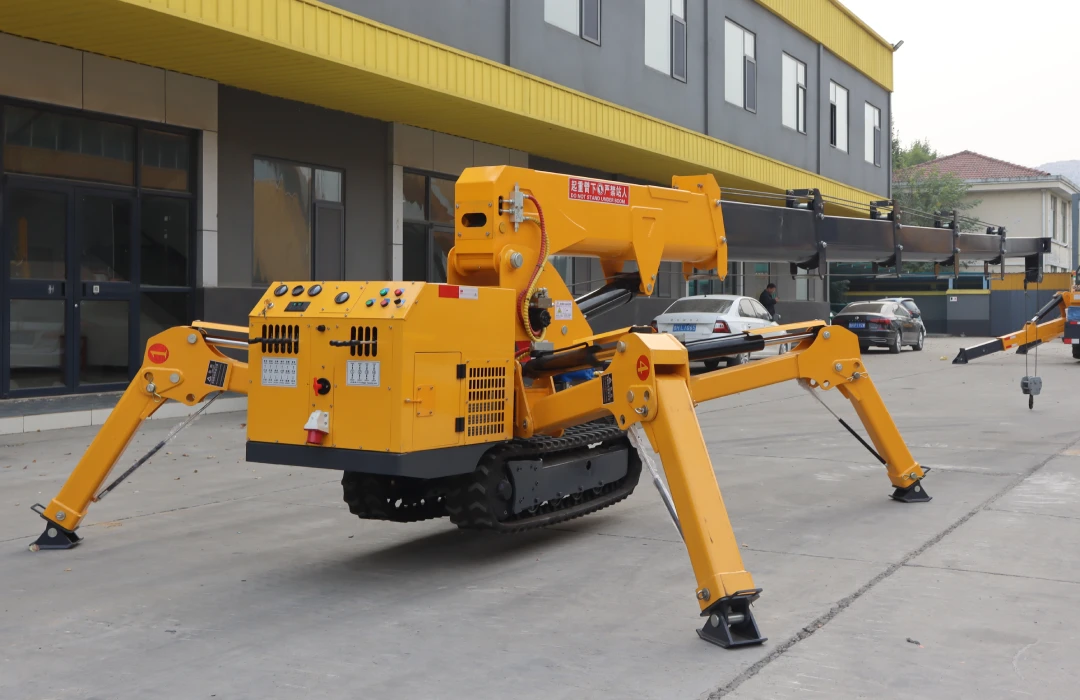
When working on rooftops, lifting heavy materials safely and efficiently is one of the biggest challenges contractors face. Choosing the right roof lifting equipment can make the difference between delays, safety risks, and a smooth, profitable project. In recent years, spider cranes have become a preferred solution for complex rooftop lifting tasks due to their compact design and powerful performance.
Why Rooftop Lifting Is So Challenging
Rooftop projects come with unique constraints that traditional cranes often struggle to handle:
- Limited access and narrow entry points
- Weight restrictions on building structures
- Uneven or fragile surfaces
- Height and safety risks for workers
Many contractors find that standard lifting solutions are either too large or too inefficient, leading to increased labor costs and longer project timelines.
What Makes Spider Cranes Ideal Roof Lifting Equipment
Spider cranes are specifically designed to operate in tight and restricted spaces, making them highly effective roof lifting equipment for modern construction needs.
Compact Size with High Lifting Capacity
Despite their small footprint, spider cranes can lift surprisingly heavy loads. This makes them ideal for rooftop HVAC installation, steel structure placement, and glass panel lifting.
Flexible Outriggers for Stability
Spider cranes feature adjustable outriggers that can adapt to uneven surfaces, ensuring stability even on rooftops with limited load-bearing areas.
Lightweight Design
Compared to traditional cranes, spider cranes are lighter, reducing the risk of structural damage when used as roof lifting equipment.
Easy Transportation
They can be transported through elevators, narrow doors, or tight staircases—something impossible for most large lifting machines.
Common Rooftop Applications
Spider cranes are widely used in various rooftop scenarios:
- HVAC unit installation
- Glass curtain wall lifting
- Solar panel installation
- Steel beam placement
- Maintenance and repair operations
For contractors working in urban environments, having reliable roof lifting equipment that can adapt to these scenarios is essential.
Key Factors to Consider Before Choosing Equipment
Before selecting the right machine, consider the following:
Capacité de levage
Make sure the crane can handle your heaviest load with a safety margin.
Working Radius
Check how far the crane needs to reach, especially for complex rooftop layouts.
Ground Pressure
Ensure the equipment won’t exceed the rooftop’s load-bearing capacity.
Source d'énergie
Electric spider cranes are ideal for indoor or low-noise environments, while diesel models provide more power for heavy-duty tasks.
Cost vs Efficiency: What Most Buyers Overlook
Many buyers focus only on the initial purchase price, but the real value comes from efficiency:
- Faster project completion
- Reduced labor requirements
- Lower risk of accidents
- Minimal site disruption
Investir dans des produits de haute qualité roof lifting equipment like spider cranes often results in better long-term returns, even if the upfront cost is higher.
How to Maximize Performance on Site
To get the best results from your spider crane:
- Conduct a site inspection before lifting
- Train operators properly
- Use appropriate attachments
- Follow safety guidelines strictly
Proper planning ensures your roof lifting equipment operates at maximum efficiency while minimizing risks.
Conclusion
Rooftop lifting doesn’t have to be complicated or risky. With the right approach and the right tools, contractors can significantly improve both safety and efficiency. Spider cranes have proven to be one of the most practical and versatile choices for modern rooftop projects.
If you’re looking for reliable and efficient roof lifting equipment, upgrading to a spider crane solution could be the smartest move for your next project.
Articles connexes

 FR
FR  EN
EN  ES
ES  ID
ID
Poster un commentaire