


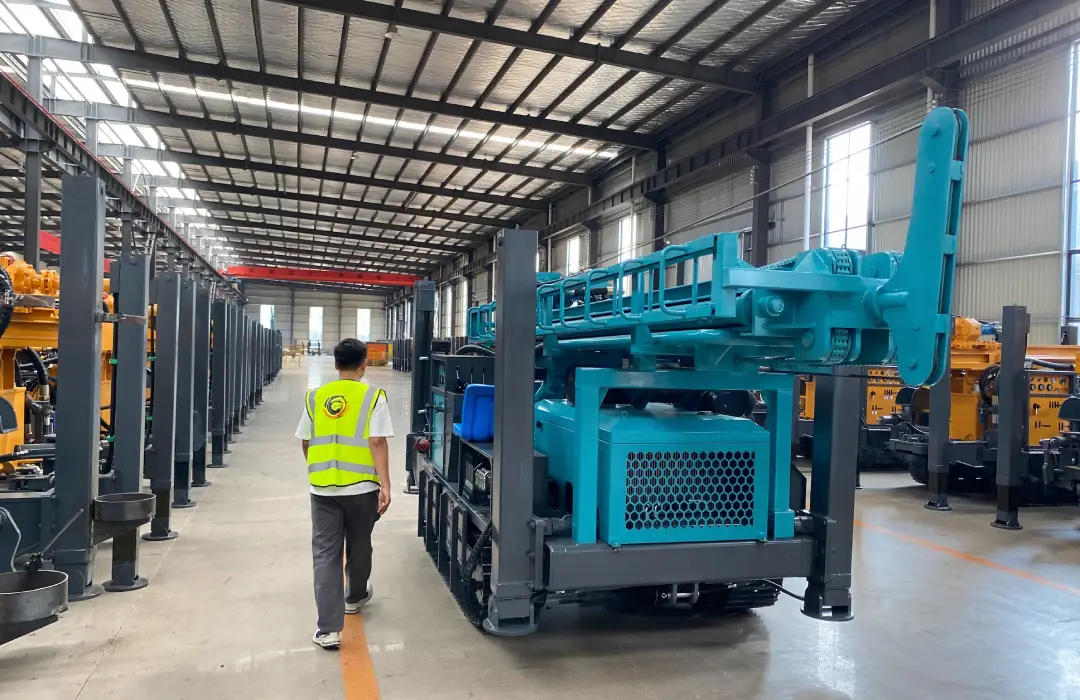
In many regions around the world, access to stable groundwater depends on choosing the right deep well drilling rig. Whether you are a drilling contractor, agricultural investor, or a water project developer, problems such as low drilling efficiency, unstable boreholes, high operating costs, and frequent breakdowns can quickly turn a water project into a financial burden. This article focuses on real-world drilling challenges and provides practical, experience-based insights to help you make better decisions when selecting and using a deep well drilling rig.
What Is a Deep Well Drilling Rig?
A deep well drilling rig is a specialized machine designed to drill groundwater wells that typically exceed 100 meters in depth, and in many cases reach 300–1000 meters depending on geological conditions. Compared with shallow water well machines, deep well rigs require:
- Higher torque and pull-back force
- Stronger mast and feeding system
- Stable hydraulic system for long-hour operation
- Compatibility with different drilling methods (mud rotary, DTH air drilling, foam drilling)
Common related terms you may also encounter include appareil de forage de puits d'eau, borehole drilling machine, deep bore drilling riget hydraulic water well drilling machine.
Common Problems Faced in Deep Well Drilling Projects
Before choosing equipment, it is critical to understand the real pain points that drilling teams face on site.
Low Penetration Rate in Hard Rock
In basalt, granite, or limestone formations, insufficient rotary torque or unstable air pressure can slow drilling progress dramatically. A deep well drilling rig with low torque output may work in soft soil but struggle seriously in hard rock layers.
Borehole Collapse and Stuck Drill Tools
In sandy or fractured formations, borehole collapse is one of the most costly issues. Without sufficient mast stability, proper drilling method selection, and compatible casing solutions, tools can get stuck, leading to downtime and expensive recovery operations.
High Fuel Consumption and Maintenance Costs
Many contractors focus only on the purchase price of a deep well drilling rig, ignoring long-term operating costs. Poor hydraulic matching, low-quality pumps, or non-standard components often result in excessive fuel consumption and frequent repairs.
Limited Versatility Across Projects
Some rigs are designed for a single drilling method. When project conditions change, contractors are forced to rent or buy additional equipment, increasing capital pressure.
Key Technical Factors That Truly Matter
Understanding specifications is not enough. You need to know which parameters actually affect performance in the field.
Drilling Depth and Pull-Back Capacity
A reliable deep well drilling rig should have a rated drilling depth that matches your real project needs, not just marketing claims. More importantly, sufficient pull-back force ensures safe tool lifting in deep and complex boreholes.
Torque and Rotation Speed
High torque is essential for hard rock drilling, while adjustable rotation speed allows better control in different formations. This balance directly affects drilling efficiency and tool life.
Hydraulic System Stability
The hydraulic system is the core of any water well drilling rig. Stable pressure, efficient cooling, and high-quality hydraulic components determine whether the machine can operate continuously for long shifts without overheating or pressure loss.
Mobility and Site Adaptability
Depending on your market, crawler-mounted or truck-mounted deep well drilling rigs may be more suitable. Remote areas, farmland, or mountainous regions require strong mobility and easy transportation.
Choosing the Right Drilling Method for Deep Wells
A deep well drilling rig is only as effective as the drilling method it supports.
Forage rotatif à la boue
Best suited for clay, sand, and loose formations. Mud stabilizes the borehole wall and carries cuttings to the surface, reducing collapse risk.
DTH Air Drilling
Highly efficient in hard rock formations. High-pressure air drives the down-the-hole hammer, delivering fast penetration rates and clean boreholes.
Foam and Air-Mist Drilling
Ideal for mixed formations where both stability and cleaning efficiency are required, especially in deep bore drilling projects.
A versatile deep well drilling rig that supports multiple methods gives contractors a significant competitive advantage.
How the Right Rig Reduces Long-Term Costs
A common misconception is that a higher-quality deep well drilling rig costs more overall. In reality, the opposite is often true.
- Faster drilling reduces labor and fuel costs
- Stable performance minimizes downtime
- Standardized components lower spare parts expenses
- Better borehole quality reduces post-drilling problems
For contractors working on agricultural irrigation, municipal water supply, or industrial wells, reliability directly translates into profit.
Who Should Invest in a Deep Well Drilling Rig?
A deep well drilling rig is especially suitable for:
- Professional drilling contractors
- Agricultural irrigation projects
- Rural and municipal water supply programs
- Mining and exploration water wells
- EPC contractors in infrastructure projects
If your projects involve deep groundwater extraction and variable geology, investing in the right equipment is a strategic decision, not just a purchase.
Réflexions finales
Selecting a deep well drilling rig is not about choosing the biggest machine or the lowest price. It is about solving real drilling problems: efficiency, stability, adaptability, and long-term cost control. By understanding your geological conditions, drilling depth requirements, and operating environment, you can choose a rig that truly supports your business growth rather than limiting it.
A well-matched deep well drilling rig does more than drill holes—it secures water, time, and profitability for every project.
Articles connexes

 FR
FR  EN
EN  ES
ES  ID
ID
Poster un commentaire