


Introduction
In the mining and construction industries, efficiency and safety are paramount. One essential piece of equipment that significantly enhances operational effectiveness is the portable crane. These cranes provide the necessary lifting power to handle heavy loads while ensuring flexibility and mobility on the job site. Whether for lifting heavy machinery, transporting construction materials, or facilitating underground infrastructure projects, selecting the right portable crane can impact productivity and cost-effectiveness. Without the proper equipment, projects can face unnecessary delays, increased labor costs, and potential safety hazards. Therefore, understanding the crucial factors involved in choosing a portable crane is essential for any mining or construction operation aiming for long-term success.
Understanding Portable Cranes
A portable crane is a highly versatile lifting device designed for mobility and ease of use. Unlike fixed cranes, these machines can be transported across job sites, providing the flexibility needed for various lifting tasks in industries like mining, tunneling, excavation, and infrastructure development. Portable cranes can be used to move raw materials, install heavy equipment, and aid in repair and maintenance tasks where conventional cranes may not be feasible. Their adaptability makes them an excellent choice for sites with space constraints or rugged terrain, as they offer easy deployment and repositioning based on project needs. Understanding the different types of portable cranes and their specific applications can help businesses select the right model to maximize efficiency and minimize downtime.
Key Features of Portable Cranes
Portable cranes come in various models with different capacities and features. It is essential to evaluate the key specifications before purchasing or deploying a crane for mining or construction purposes. The following are crucial aspects to consider:
| Feature | Importance in Mining and Construction |
|---|---|
| Load Capacity | Ensures safe lifting of heavy materials and equipment, reducing the risk of structural damage or workplace accidents. |
| Mobility | Allows easy transportation across rough terrain and confined spaces, making operations more efficient and cost-effective. |
| Boom Length | Determines the reach and lifting height, which is critical for tasks such as hoisting materials onto elevated structures or deep excavation sites. |
| Power Source | Options include electric, hydraulic, and diesel-powered cranes, each suitable for different work environments and operational requirements. |
| Durability | Essential for harsh mining and construction environments, ensuring long-term reliability and reducing maintenance costs. |
Factors to Consider When Choosing a Portable Crane
1. Load Capacity and Weight Handling
The first step in selecting a portable crane is to determine your lifting requirements. Mining and construction operations often involve handling extremely heavy materials such as excavators, mucking loaders, steel structures, and concrete slabs. If a crane is not designed to support the necessary weight, it can lead to equipment failure, potential safety hazards, and delays in project timelines. Always check the maximum load-bearing capacity of the crane and ensure it exceeds your heaviest lifting needs. Additionally, consider the crane’s stability when handling dynamic loads, as sudden shifts in weight distribution can impact balance and operational safety. Investing in a high-capacity crane reduces the risk of overloading and extends the lifespan of the equipment, ultimately enhancing operational efficiency.
2. Mobility and Terrain Adaptability
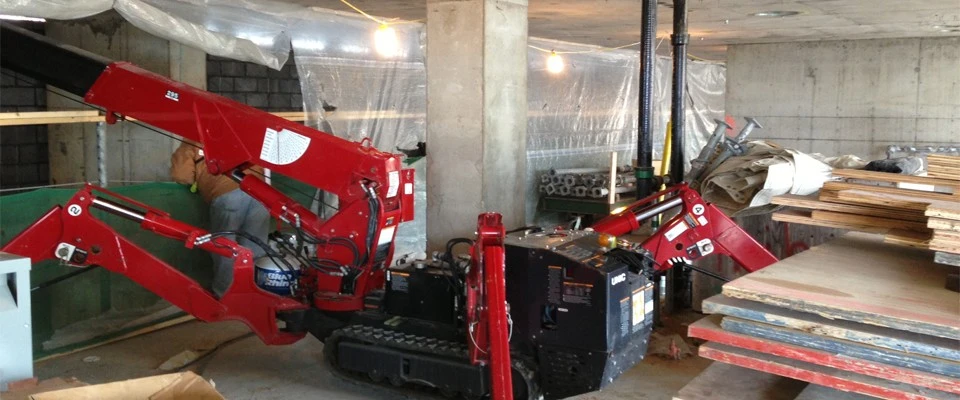
In rugged mining and construction sites, mobility is a crucial factor that affects efficiency and productivity. Some cranes are designed with crawler tracks, making them ideal for rough terrains where wheeled cranes might struggle. A crawler portable crane provides enhanced stability, allowing it to operate on uneven surfaces without compromising safety. If your work involves underground mining, consider a compact and lightweight model that can maneuver through tight spaces without obstructing workflow. Additionally, look for cranes with adjustable boom lengths to maximize reach in confined areas. Evaluating the terrain and site conditions before choosing a crane ensures that your equipment can handle the environmental challenges without unnecessary wear and tear, leading to fewer maintenance issues and extended service life.
3. Power Source: Electric, Hydraulic, or Diesel?
The power source of a portable crane significantly affects its usability and operational costs. Different power options are suited for various working conditions, and choosing the right one can improve efficiency while reducing fuel consumption and maintenance requirements.
- Electric cranes are ideal for indoor construction sites and confined spaces where emissions and noise levels must be kept low. These cranes offer cost-effective operation and require minimal maintenance, making them an excellent choice for sustainable energy solutions.
- Hydraulic cranes provide superior lifting power and smooth operation, making them suitable for heavy-duty mining and excavation tasks. Their ability to handle large loads with precision makes them a preferred choice for demanding projects that require strength and reliability.
- Diesel-powered cranes are built for outdoor environments and remote mining locations where electrical power sources are unavailable. They offer high performance and endurance, allowing operators to complete heavy lifting tasks without interruption. However, they require regular fuel replenishment and emissions control measures to comply with environmental regulations.
Choosing the right power source depends on the work environment, budget, and operational needs, ensuring optimal performance and minimal downtime.
4. Safety Features and Compliance
Safety is a top priority in the mining and construction industries, where heavy machinery poses significant risks to workers. When selecting a portable crane, look for models equipped with advanced safety features such as anti-sway control, automatic load detection, emergency stop functions, and overload protection systems. These features help prevent workplace accidents, reduce equipment damage, and improve overall operational security. Additionally, ensure that the crane meets industry safety regulations and standards, such as those set by OSHA (Occupational Safety and Health Administration) or ISO (International Organization for Standardization). Investing in a crane with built-in safety mechanisms not only protects workers but also minimizes liability risks and enhances project efficiency.
Applications of Portable Cranes in Mining and Construction
Portable cranes serve numerous purposes in heavy industries, making them indispensable tools in construction and mining operations.
- Mining Operations: These cranes are used for lifting heavy machinery, repairing underground structures, and transporting extracted materials from deep excavation sites. They improve logistics and reduce manual labor, making mining operations more efficient.
- Tunnel Repair and Maintenance: Essential for positioning equipment and materials in confined underground spaces, portable cranes help ensure smooth repair work and infrastructure stability in tunnel construction.
- Excavation Support: Cranes assist in lifting excavators, drilling rigs, and other heavy-duty excavation tools, enabling workers to complete large-scale excavation projects with ease.
- Road and Bridge Construction: Portable cranes facilitate the placement of concrete segments and steel frameworks, expediting roadwork and bridge-building projects. Their mobility allows for quick repositioning, improving workflow and reducing delays.
Why Choose Unite Machinery for Your Portable Crane Needs?
At Unite Machinery, we specialize in high-quality mining and construction equipment, including portable cranes, mining dump trucks, mucking loaders, and drilling rigs. Our products are built for durability, reliability, and optimal performance in extreme conditions. We understand the challenges faced by mining and construction professionals and provide solutions tailored to their specific needs.
Our range of portable cranes includes models designed for both heavy-duty lifting and compact applications. Whether you require a crane for underground mining, infrastructure repair, or large-scale construction, Unite Machinery has the right solution. Our commitment to quality and customer satisfaction ensures that every crane we manufacture meets the highest industry standards, offering you long-term reliability, superior safety, and cost-effective performance.
Conclusion
Selecting the right portable crane involves evaluating key factors such as load capacity, mobility, power source, and safety features. Whether used in mining, excavation, or construction, a well-chosen portable crane can significantly enhance efficiency and safety.
For more information on premium mining and construction equipment, explore our wide range of products at Unite Machinery. If you are looking for additional heavy machinery, check out our Excavators, Mining Dump Trucks, and Mucking Loaders today!
Related Posts

 EN
EN  ES
ES  ID
ID  FR
FR
Post a Comment